
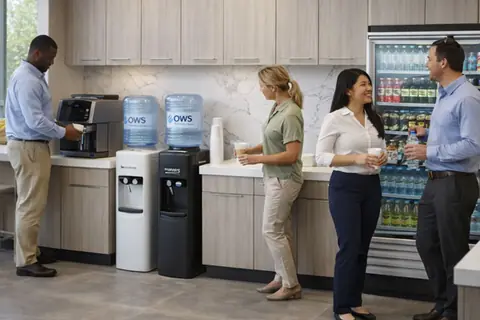
Statewide overview: Illinois office water service should be scoped by location because a Chicago tower, suburban campus and regional production office create different delivery and installation work. Buyers should align dispenser capacity, route or filter frequency, sanitation, response and contract cost before comparing companies.
Plan Illinois office water delivery around access and workplace use
Office water delivery in Illinois ranges from Chicago high-rises and dense medical properties to suburban corporate offices, warehouses, manufacturing support teams and downstate professional workplaces. Loading docks, freight elevators, security desks and restricted delivery times can add more work than the mileage suggests. List access rules for every address before asking a water bottle company to quote service.
Headcount alone does not show peak demand. Hybrid offices may be busiest midweek, while healthcare and production facilities can use water across long or multiple shifts. Count visitors, training activity and separated floors. Ask how the selected dispenser recovers after repeated cold-water fills and whether several smaller points would serve people better. Office cooler sizing guidance helps buyers test the capacity assumption.
Bottled programs need space for full and empty containers without blocking corridors or creating excessive lifting. Winter access and route delays also justify a clear reserve plan. The Illinois provider should state delivery frequency, normal quantity, minimums and the procedure for changing an order when attendance rises.
Compare bottleless installation and bottled-water handling
Bottleless water coolers can reduce container storage in a permanent building with approved plumbing. The proposal should include the survey, fittings, tubing, testing, filters, sanitation and repairs. In a Chicago or suburban multi-tenant property, building management may require scheduled work and specific installation methods. Bottled delivery avoids those changes but transfers more receiving and inventory work to the office.
Water treatment should be selected for the incoming supply and property plumbing. Ask what each filter addresses, how capacity was chosen and how replacements are recorded. Older buildings may affect taste or sediment after water enters the property. The provider should inspect the intended location and explain what happens if taste, flow or pressure changes. Bottleless maintenance frequency should appear in the agreement.
A multi-location Illinois organization may prefer a consistent dispenser family while using bottled service at sites where plumbing is impractical. Standardization can simplify employee use and reporting, but local route days and technician contacts should remain visible. One account should not hide which office is receiving late deliveries or repeated repairs.
Price local Illinois coverage and full service responsibility
Compare annual cost at the same scope: equipment or rental, bottles, route fees, deposits, installation, filters, sanitation, repairs, minimums and removal. Test a routine month and a peak-demand month. The bottleless versus bottled cost comparison and office water price guide help expose differences behind the base rate.
Require address-level coverage. Ask who serves Chicago, Aurora, Rockford, Springfield and each retained Illinois market, the normal service day and the response target for a missed delivery or failed cooler. If travel or emergency work costs more outside a core territory, that should be stated before the contract begins.
Give finalists one written requirement covering locations, attendance, shifts, public use, cooler placement, storage, access, plumbing and desired response. Ask for equipment, service calendar, recurring charges, one-time fees and exclusions separately. That creates a more useful Illinois water-company comparison and clearer expectations after launch. Request Illinois office water pricing with the completed brief.