
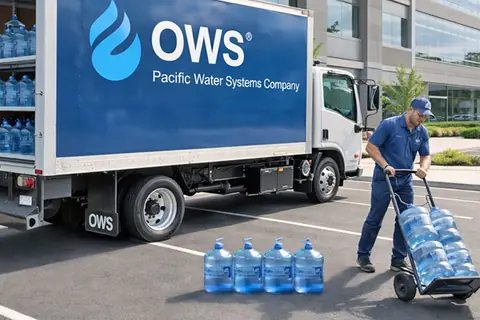
Statewide overview: Iowa office water service should be planned around workplace shifts, winter delivery access, protected storage and the provider's local route or technician territory. A complete quote makes equipment, water, filtration, sanitation and repair responsibilities visible before price is compared.
Set Iowa delivery frequency from real workplace demand
Office water delivery in Iowa serves Des Moines insurance and professional offices, Cedar Rapids and Davenport employers, medical workplaces, manufacturing support teams and regional businesses. Some locations run one weekday schedule; others support shifts or public traffic. Count users by period, occupied areas and the busiest refill window so the company prices useful capacity rather than an average that hides peaks.
Cold-weather delivery access and indoor storage deserve planning. Full bottles should remain protected from freezing, chemicals and equipment traffic, with a clear route from receiving to the cooler. Ask how weather delays are communicated and what reserve quantity is recommended. Office delivery reliability depends on those procedures as much as the route calendar.
Cooler placement should reduce walking without creating a bottleneck. A manufacturing office or clinic may need separate stations for staff and visitors. Ask about chilled recovery, hot-water demand and accessibility, then identify who changes bottles or reports low flow.
Choose bottled or bottleless service by site practicality
Bottleless water service can reduce delivery handling in a permanent Iowa workplace with suitable plumbing. It adds a site survey, installation, filters, sanitation and repair support. Bottled service can fit temporary or leased offices and locations without a practical water connection. Types of office water systems help buyers compare the operating work, not merely the dispenser appearance.
The provider should explain what filtration addresses and how capacity matches expected use. Ask for filter dates and sanitation records, plus the response for changed taste or pressure. A complex filter train is not automatically better; it should solve a defined need in the building supply or plumbing.
For organizations with several Iowa offices, standard equipment can simplify training, but route days and technician contacts remain local. Require location-level records for bottle quantities, filter changes and service calls so overstock or recurring downtime can be corrected.
A useful site review also covers electrical access, drain or drip-tray needs and the route a technician will take through the building. Those details matter in older properties, medical settings and controlled production areas where an apparently simple cooler placement can create avoidable facilities work.
Compare Iowa water companies on service reach and total price
Price the full year: rental or equipment, bottles, deliveries, deposits, minimums, installation, filters, sanitation, repairs and removal. The real cost of bottled water delivery helps facilities teams identify work and charges beyond the bottle itself.
Confirm the route or service territory for every address. Ask what happens when inventory runs low, a route is delayed, a cooler stops chilling or a bottleless unit needs parts. The normal response, escalation contact and extra charges should be written into the Iowa proposal.
Give each bidder the same locations, shifts, visitor use, cooler features, receiving limits, storage and plumbing facts. Separating one-time costs, recurring charges and exclusions produces a more honest comparison. Compare Iowa office water service prices when that brief is ready.