
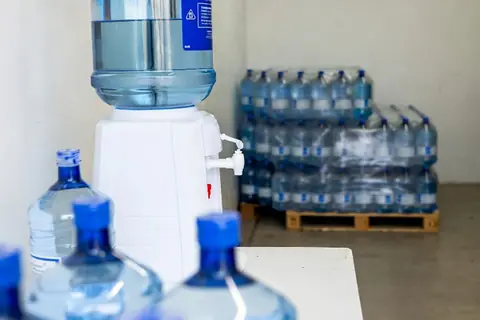
Statewide overview: New Jersey office water service should be scoped by address, occupancy, building access and required response. Comparing equipment, delivered water or filters, sanitation, repairs and contract terms together shows the real cost of keeping each workplace supplied.
Plan New Jersey office water around density and access
Office water delivery in New Jersey serves Newark and Jersey City professional workplaces, Edison-area employers, healthcare facilities, pharmaceutical and logistics teams and offices across dense suburban and regional markets. A high-rise suite, business park and distribution office can require different receiving plans. Count users by shift, visitors and separated work areas before equipment or delivery frequency is selected.
Document loading zones, service elevators, security procedures, delivery windows and indoor storage. A provider may serve nearby cities on different route days, and a missed building window can become a missed visit. Ask how order changes and access failures are handled. Reliable office water delivery depends on clear route and receiving procedures.
Place dispensers where employees and guests can reach them without crowding reception, laboratory, clinical or production areas. Ask how chilled recovery performs during the busiest break and whether hot-water use changes output. Large or divided buildings may need several stations even when a single unit appears less expensive.
Evaluate bottled and bottleless service at the property
Bottled water delivery can fit leased offices and sites where plumbing work is restricted. It creates recurring receiving, lifting, storage and empty-pickup duties. Bottleless water coolers reduce bottle handling in permanent workplaces but require a survey, installation, filters, sanitation and local repair. The bottleless water cooler service page explains the equipment as a maintained program.
Ask what each filtration stage is designed to address and how the provider matched capacity to expected gallons. The site survey should identify the supply line, shutoff, outlet and any drainage or leak-protection requirement. In laboratories, healthcare workplaces or controlled facilities, coordinate installation and service with access rules and require dated maintenance records.
New Jersey organizations with multiple locations should request reporting by address. Bottle quantities, route exceptions, filter dates and repair calls reveal where capacity or schedules need adjustment. Standard equipment can simplify employee use, but service contacts, building requirements and response still need to remain local and visible.
Compare New Jersey water companies on full-year value
Calculate twelve months of equipment or rental, bottles, delivery charges, deposits, minimums, installation, filters, sanitation, repairs and removal. Include building fees or after-hours access when they apply. The hidden costs of bottled delivery help facilities teams include internal receiving and storage work.
Confirm which route or technician serves Newark, Jersey City, Paterson, Edison and every retained New Jersey market. Test a missed route, failed access attempt, empty inventory, leak and cooling outage. Expected notification, escalation, response and special-visit fees should be written. A broad state claim is not a substitute for address-level coverage.
Give finalists the same locations, attendance by shift, visitor demand, desired temperatures, dispenser features, storage, access, plumbing and support expectations. Ask for one-time and recurring costs, exclusions, renewal language and service calendars separately. Then compare New Jersey office water delivery prices against the complete operating requirement.