
Statewide overview: Ohio office water service should match shift patterns, visitor demand, building access and the provider route or technician assigned to each address. Complete proposals price equipment, delivered water or filters, sanitation, repair and contract response on the same scope.
Size Ohio office water around people and operating hours
Office water delivery in Ohio supports Columbus professional and government-related teams, Cleveland healthcare and business workplaces, Cincinnati employers, distribution operations and manufacturing offices across the state. A weekday suite, public clinic and multi-shift facility can have similar headcounts but very different peak use. Count employees by occupied period, guests and work zone before selecting equipment.
Map the busiest refill periods and the distance between departments. Several well-placed coolers may serve a divided property better than one large central unit. Ask about chilled recovery after repeated fills, hot-water capacity and accessibility. The workplace cooler sizing guide helps buyers discuss demand with useful detail.
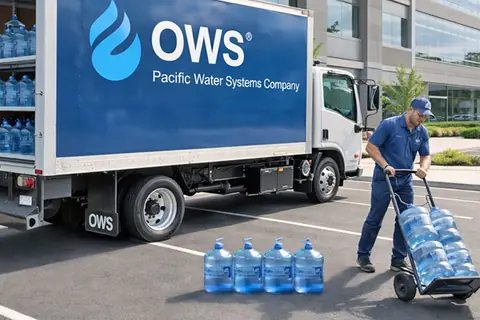
For bottled service, record loading distance, stairs, security, delivery windows, storage and empty pickup. The Ohio water bottle company should identify route day, order-change cutoff, minimum quantities and reserve guidance. Winter weather, holidays and facility closures should have a defined notification and rescheduling process, including who the office contacts when inventory is unexpectedly low.
Compare bottled handling with bottleless maintenance
Bottled water delivery can fit temporary, leased or low-volume workplaces without changing plumbing. It adds receiving, bottle changes and inventory work. Bottleless water coolers can reduce those duties at permanent sites but require survey, installation, filters, sanitation and repair. Review office water service choices by the tasks and support included throughout the agreement.
Ask what each filtration stage is designed to address and how expected water volume affected capacity. The site survey should identify supply, shutoff, outlet and any drainage or leak-control requirement. Require dated filter and sanitation records and a clear response for changed taste, low flow, a leak or failure to heat or chill.
Ohio organizations with several offices should request reporting by location. Delivery quantities, route exceptions, filter changes, repair calls and downtime show where a site needs a different unit or service interval. Standard models may simplify training, but local route, technician and building conditions should remain visible.
Compare Ohio water companies on annual price and response
Calculate twelve months of equipment or rental, bottles, delivery fees, deposits, minimums, installation, filters, sanitation, repairs and removal. Test normal attendance and a busy season or growth case. The office water delivery cost guide helps separate headline pricing from the complete service cost.
Confirm which route or technician serves Columbus, Cleveland, Cincinnati, Toledo, Akron and every retained Ohio market. Ask what occurs after a missed route, failed access, empty inventory or equipment outage. Notification, escalation, expected response and special-visit charges should be stated. This address-level answer defines practical local reach.
Give each provider the same locations, shifts, visitors, desired temperatures, dispenser features, storage, access, plumbing and service expectations. Ask for one-time costs, recurring fees, exclusions and renewal language separately. With a shared brief, compare Ohio office water service prices and identify which proposal covers the full work.