
Statewide overview: Vermont office water service should be planned around workplace demand, winter access, route distance, storage and technician availability. Complete proposals define the equipment, deliveries or filtration, sanitation, repair and response included for the exact address.
Plan Vermont delivery around route reach and winter access
Office water delivery in Vermont supports Burlington professional and healthcare workplaces, South Burlington and Rutland employers, Montpelier offices, hospitality teams and businesses in smaller communities. Route frequency and backup options can vary by address. Count employees by occupied period, visitors and separate work areas so bottle quantity or equipment output reflects the site rather than a broad statewide average.
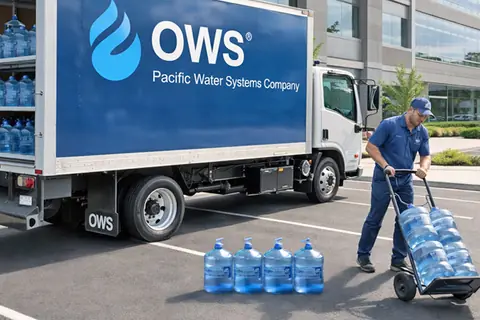
Winter receiving needs a written plan. Record where the vehicle can stop, stairs, security, indoor storage and who maintains the delivery path. Ask how weather delays are communicated and rescheduled. Full bottles should remain indoors away from freezing temperatures, chemicals and equipment traffic. The office delivery reliability guide shows why these local procedures matter.
Place coolers where people can refill without long walks or crowding public areas. Ask about chilled recovery, hot-water use and accessibility during the busiest period. A divided medical, hospitality or production workplace may need more than one station even if its total headcount appears suitable for a single unit.
Choose bottled or bottleless service by building practicality
Bottled water delivery can fit leased, seasonal, temporary and regional Vermont workplaces without plumbing changes. It creates recurring receiving, bottle-changing, storage and empty-pickup duties. Bottleless coolers reduce container handling at permanent locations but require installation, filters, sanitation and repair. The delivery versus purchased bottles guide helps identify the operating work involved.
For bottleless service, ask what every filter stage is intended to address and how expected gallons affected capacity. The site survey should locate water supply, shutoff, power and any drainage or leak-protection need. Clarify preventive visit timing, parts availability and what temporary support is offered when a regional unit requires a longer repair.
Organizations with several Vermont workplaces should track service by address. Bottle quantities, route delays, filter dates, repair calls and downtime show which site needs a different schedule or model. Consistent controls can simplify employee use, while local route and technician details remain visible to facilities management.
Compare Vermont water companies on annual cost and response
Price twelve months of rental or equipment, bottles, route charges, deposits, minimums, installation, filters, sanitation, repair and removal. Include travel or special visits when applicable. The office water service contract guide helps buyers identify responsibilities and exclusions hidden behind a base rate.
Confirm which route or technician covers Burlington, South Burlington, Rutland, Barre and each retained Vermont address. Ask what happens after a weather delay, failed access, empty inventory or cooler outage. Notification, escalation, expected response and any additional fee should be written. Address-level support is the practical meaning of local reach.
Give finalists the same locations, shifts, visitors, dispenser features, storage, receiving access, plumbing and service expectations. Ask for one-time and recurring costs, exclusions and renewal terms separately. Once that brief is aligned, compare Vermont office water service prices on the complete work included.