
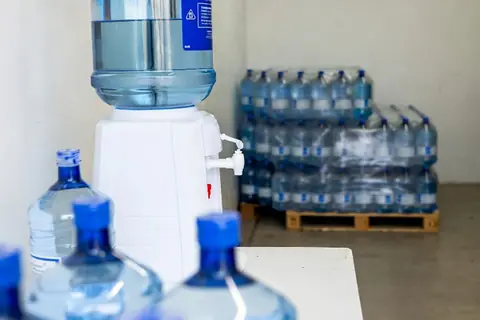
Statewide overview: Wyoming office water service should be planned around route distance, workplace shifts, winter access, protected storage and technician availability. The strongest proposal defines the full equipment, delivery or filtration, sanitation, repair and response plan.
Plan Wyoming delivery around distance, weather and demand
Office water delivery in Wyoming supports Cheyenne professional and government-related workplaces, Casper healthcare and energy teams, Laramie employers, hospitality operations and businesses in smaller communities. Long distances between markets can affect visit frequency and emergency options. Confirm the exact address and count employees by shift, visitors and work zones before volume is proposed.
Winter receiving deserves explicit planning. Record vehicle access, stairs, security, indoor storage and who maintains the delivery path. Ask how road or weather delays are communicated and when the route returns. Full bottles should stay protected from freezing, chemicals and equipment traffic. The office delivery reliability guide helps buyers test those procedures.
Place dispensers where employees can use them without long walks or exposure to dust, vehicle traffic and extreme temperatures. Ask about chilled recovery after repeated fills, hot-water demand and accessibility. A field-service or production workplace may need several points of use even when its headcount appears manageable for one unit. Include visiting crews and seasonal staffing in the peak-demand estimate.
Compare bottled service with maintainable bottleless equipment
Bottled delivery can fit temporary, leased, remote and lower-volume Wyoming workplaces without plumbing work. It creates receiving, lifting, storage and empty-pickup duties. Bottleless coolers reduce container handling at permanent sites but require suitable water and power, installation, filters, sanitation and repairs. The bottleless versus bottled comparison should include technician reach.
Ask why each filtration stage is included and how expected gallons affected capacity. The survey should locate supply, shutoff, electrical access and any drainage or leak-protection requirement. Clarify preventive service timing, parts availability and temporary support if a unit at a regional address needs a longer repair.
Organizations with several Wyoming workplaces should track bottle quantities, route delays, filter dates, service calls and downtime by address. Standard controls can simplify staff use, but local route and technician facts must remain visible. Those records support a specific schedule or equipment change instead of an unsupported statewide adjustment.
Compare Wyoming water companies on full cost and reach
Calculate twelve months of equipment or rental, bottles, route fees, deposits, minimums, installation, filters, sanitation, repairs and removal. Include travel and special visits where applicable. The office water service contract guide helps identify exclusions and responsibilities that a basic monthly rate may omit.
Confirm which route or technician covers Cheyenne, Casper, Laramie, Gillette and each retained Wyoming address. Ask what happens after a weather delay, failed access, empty inventory or equipment outage. Notification, escalation, expected response and additional charges should be written. That address-level answer defines practical service reach.
Give finalists the same locations, shifts, visitors, dispenser features, storage, access, plumbing and response expectations. Ask for one-time costs, recurring fees, exclusions and renewal terms separately. When that operating brief is complete, compare Wyoming office water service prices on the full work each company will provide.