
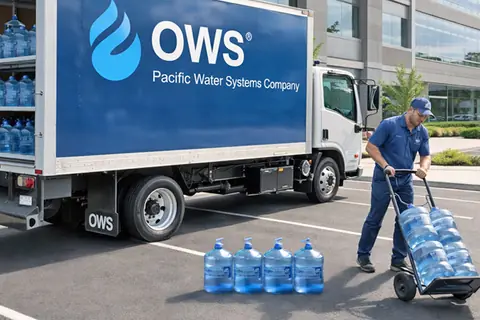
Statewide overview: Colorado office water service should account for building elevation, dry conditions, workplace activity, delivery access and reliable local maintenance. Buyers can compare bottled and bottleless options fairly only when capacity, filtration, routine service and repair responsibility are written into every quote.
Estimate workplace water demand for Colorado conditions
Office water delivery in Colorado supports Denver professional offices, Front Range technology and healthcare employers, mountain-market workplaces, industrial teams and growing regional businesses. Dry air, active employees and elevation can influence how quickly water is used, but they do not replace a site count. Facilities teams should measure attendance by shift, visitor traffic, break-room use and the number of occupied floors. That produces a more useful requirement than applying one gallons-per-person estimate statewide.
Cooler recovery matters when many people fill bottles at once. Ask how long the proposed unit takes to restore chilled capacity and whether a second dispenser would reduce walking or queues. A Colorado office with hybrid anchor days may need equipment sized for Tuesday rather than Friday. The guide to choosing an office cooler size helps buyers connect headcount with layout and peak use.
Bottled delivery also needs reserve planning. Full containers should be stored indoors, away from sunlight, chemicals and heavy traffic, with empties kept organized for pickup. Winter access, loading rules and travel to mountain or outlying markets can affect the route. Ask the water bottle company to define the normal delivery interval, weather notification and emergency replenishment process for the exact Colorado address.
Specify filtration, installation and bottleless maintenance
Bottleless water service can reduce storage and repetitive lifting in a steadily occupied workplace. The site still needs a suitable potable-water line, electrical outlet, service clearance and an approved tubing path. In leased or multi-tenant buildings, property management may need to review the installation. Confirm whether the proposal includes the site survey, fittings, pressure adjustments, testing and restoration at removal. Bottleless installation requirements provide a checklist for that conversation.
Filtration should be explained in terms of the water and desired result. Carbon, sediment control, scale management and reverse osmosis have different roles and service intervals. Ask which conditions the system is designed to address and how filter capacity relates to expected volume. A responsible provider should not promise that a complex system is necessary without evidence or leave the facilities team guessing when cartridges were changed.
Maintenance affects taste, flow and uptime. The agreement should state sanitation frequency, filter replacement, repair response and what happens when a component fails between planned visits. Colorado organizations with multiple offices should request a service log for each dispenser. That record makes it easier to compare performance across Denver, Colorado Springs, Fort Collins and other retained markets.
Compare Colorado bottled water companies on full-year cost
A bottled proposal should show containers, delivery frequency, rental, deposits, route fees, minimums and empty pickup. A bottleless quote should show equipment, installation, filters, sanitation, repairs and contract terms. Put both into a twelve-month view that includes internal storage or coordination work. Bottleless and bottled cost differences are clearer when the same demand and support level are used.
Coverage is part of price. Ask who provides local service, the normal route or technician schedule and the escalation path for missed delivery, no-flow or temperature failure. For a mountain or regional site, confirm travel charges and realistic response rather than assuming a Denver service promise applies everywhere. A candid limit is more useful than vague statewide coverage.
Send every Colorado bidder a single brief covering addresses, attendance, shifts, dispenser locations, water features, delivery access, storage and service expectations. Require one-time fees, recurring charges, exclusions and renewal language to be identified separately. That makes the choice about operating fit rather than presentation. Request Colorado office water pricing after the workplace scope is complete.